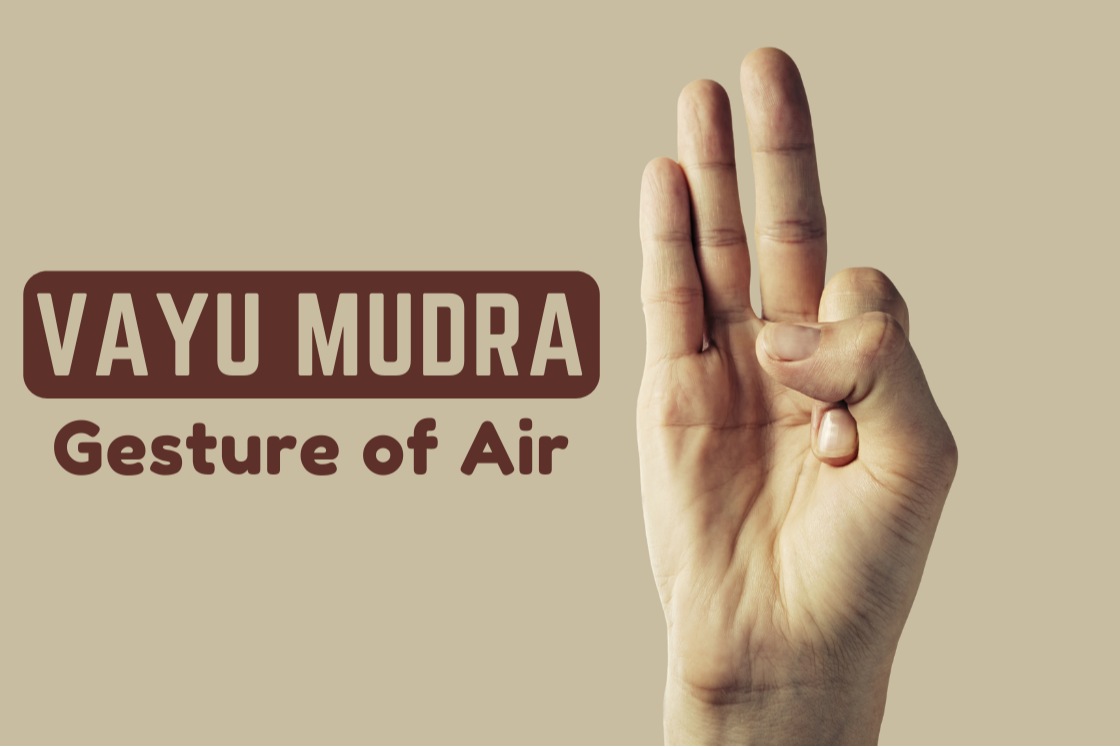
Many people today experience digestive discomfort, bloating, restlessness, or excess gas in the body. In yogic and Ayurvedic traditions, these symptoms are often linked to an imbalance of the air element, known as Vata dosha.
Vayu Mudra is a traditional yoga hand gesture designed to help balance this air element in the body. Practised for centuries in yoga and Ayurveda, this simple mudra is believed to regulate the movement of energy and support the proper flow of prana.
Regular practice of Vayu Mudra may help reduce gas, bloating, joint discomfort, and restlessness caused by excess Vata. The best part is that it is easy to practise—whether you are sitting in meditation, relaxing at home, or even travelling.
In this guide, you will learn how to do Vayu Mudra, its benefits, the right practice method, and important precautions to practise it safely.
Meaning
The word Vayu Mudra comes from Sanskrit. Vayu means “air” or “wind,” and Mudra means “gesture” or “seal.” Together, Vayu Mudra refers to a yogic hand gesture used to balance the air element within the body.
In yoga and Ayurveda, the air element is closely linked with the Vata dosha, which governs movement in the body. Vata influences many important functions, including breathing, circulation, nerve impulses, and digestion. When this energy becomes excessive or disturbed, it may lead to problems such as gas, bloating, restlessness, or joint discomfort.
The hand position of Vayu Mudra reflects this balancing principle. In yogic symbolism, the thumb represents the fire element, while the index finger represents the air element. When the index finger is gently pressed at the base of the thumb, the fire element is believed to help regulate excess air in the body.
According to Ayurveda and yogic philosophy, the body contains 49 types of Vayu (vital airs) that control different physiological and energetic functions. Among these, five are considered the primary life forces, supported by five subsidiary pranas. Practising Vayu Mudra is believed to support the balanced movement of prana, the life energy that flows through the body.
For deeper benefits, Vayu Mudra can be practised during meditation or pranayama, which helps harmonise the nadis (subtle energy channels) and maintain a smooth flow of energy throughout the body.
Five types of vayu in yogic physiology
In yogic philosophy, Vayu refers to the subtle movements of prana (life energy) within the body. Although Ayurveda describes many types of Vayu, five are considered the primary life forces that regulate important bodily functions.
- Prana Vayu – governs breathing, heart activity, and the intake of life energy.
- Apana Vayu – responsible for elimination, reproduction, and downward energy flow.
- Samana Vayu – supports digestion, metabolism, and nutrient absorption.
- Udana Vayu – controls speech, expression, and upward movement of energy.
- Vyana Vayu – circulates energy throughout the body and supports overall coordination.
Balancing these subtle energies is considered essential for maintaining physical health and mental clarity. In yogic practice, gestures such as Vayu Mudra are believed to help regulate the movement of these vital energies.
Finger–element connection in yoga mudras
In yogic philosophy, each finger represents one of the five natural elements (Pancha Mahabhuta) that make up the human body. Hand gestures or mudras work by balancing these elements.
| Finger | Element |
|---|---|
| Thumb | Fire (Agni) |
| Index Finger | Air (Vayu) |
| Middle Finger | Space (Akasha) |
| Ring Finger | Earth (Prithvi) |
| Little Finger | Water (Jala) |
In Vayu Mudra, the index finger (air element) is gently pressed under the thumb (fire element). This symbolic action is believed to help reduce excess air in the body and restore balance to the Vata dosha.
How to Do Vayu Mudra(Steps)
- Sit in a comfortable position such as Sukhasana (Easy Pose), Vajrasana (Thunderbolt Pose), or Padmasana (Lotus Pose). Keep your spine straight and your shoulders relaxed.
- Close your eyes and take a few slow, deep breaths. This helps calm the mind and prepares the body for the practice.
- Place your hands on your knees or thighs with your palms facing upward.
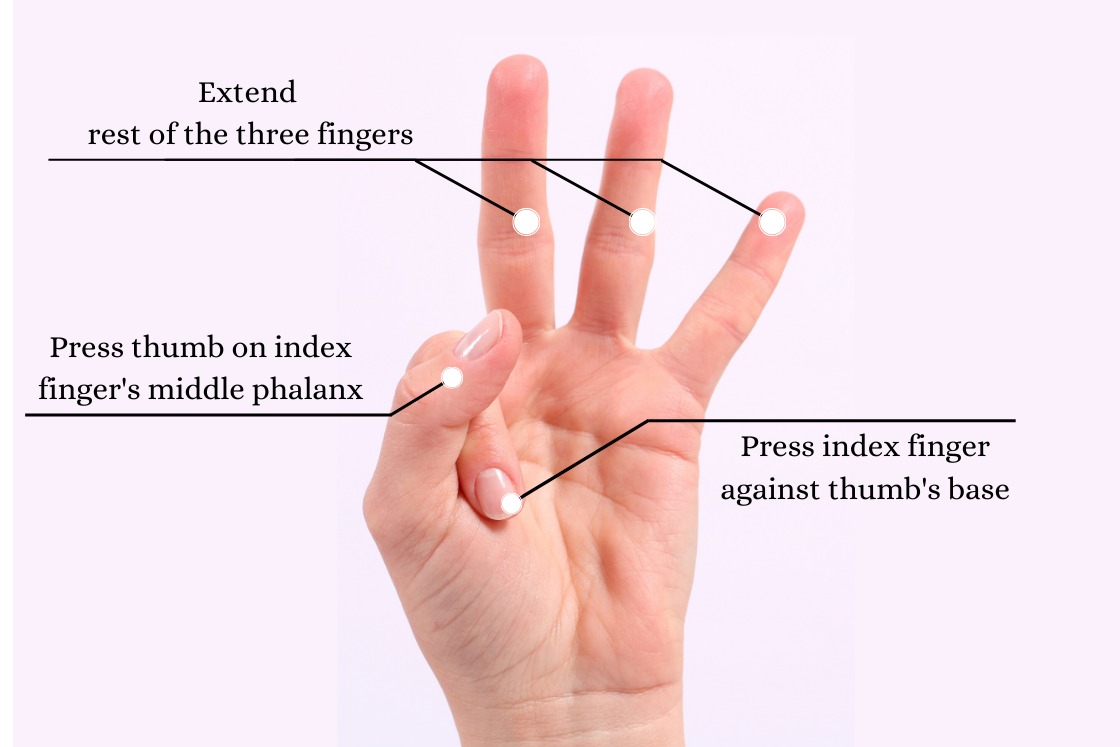
- Fold your index finger so that its tip touches the base of your thumb.
- Gently press the index finger with your thumb. Avoid applying too much pressure; the touch should remain relaxed.
- Keep the remaining three fingers extended but relaxed.
- Rest your hands on your thighs while maintaining the gesture.
- Breathe slowly and naturally. You may also softly chant OM during the practice to deepen the meditative experience.
Note: The key difference between Vayu Mudra and Gyan Mudra is the finger placement. In Vayu Mudra, you touch the base of the thumb with the index finger. In Gyan Mudra, you touch the tip of the thumb with the index finger.
Time & duration
- Best Time: The ideal time to practise Vayu Mudra is in the morning on an empty stomach, when the body and mind are calm. However, it can also be practised during meditation or pranayama sessions, as the relaxed state of the mind supports better energy balance.
- Duration: Beginners can start with 2–5 minutes per session and slowly increase the practice time. With regular practice, you can extend it to 15–30 minutes a day. If it feels more comfortable, you may divide the practice into two or three shorter sessions throughout the day.
Precautions
While Vayu Mudra is generally safe and simple to practise, keeping a few precautions in mind can help you practise it comfortably and effectively.
- Avoid pressing the index finger too hard with the thumb. The gesture should remain gentle and relaxed.
- Use light pressure to prevent strain or discomfort in the fingers.
- Make sure the index finger rests comfortably at the base of the thumb without forcing the position.
- Keep your spine straight while sitting so that the breath and energy can flow freely.
- If you feel pain or discomfort in your fingers or hands, adjust the pressure or relax the gesture for a while.
- If you have existing medical conditions or joint issues, it is advisable to consult a healthcare professional before practising regularly.
Side effects
Vayu Mudra generally does not have significant side effects. Most people can practice it safely without adverse effects. However, if you experience any discomfort or unusual symptoms, it’s advisable to stop and consult a healthcare provider.
Vayu Mudra Benefits
Vayu Mudra is believed to help balance the air element (Vata) in the body. Regular practice may support digestion, calm the nervous system, and improve overall energy flow.
- Reduces Symptoms of Parkinson’s Disease: Vayu Mudra may help reduce Parkinson’s disease symptoms by supporting nerve cell recovery and regeneration. Parkinson’s disease involves the loss of nerve cells in the substantia nigra, which decreases dopamine levels and impairs brain function. Practicing Vayu Mudra might assist in improving these conditions by aiding nerve cell repair.
- Stimulates Endocrine Glands: A malfunctioning endocrine system can cause issues like poor growth, metabolism problems, and hormonal imbalances. Vayu Mudra helps by directing energy to the brain and activating the hypothalamus, which in turn stimulates the endocrine glands and supports better overall function.
- Vayu Mudra for Gastric Problems: Vayu Mudra, also known as the Mudra of Air, is particularly effective for addressing gas-related issues. Practicing this mudra stimulates the part of the brain linked to the Vagus nerve, which regulates the Vata (Air) Dosha. This helps manage conditions such as flatulence, indigestion, and acid reflux, making Vayu Mudra an effective remedy for gastric problems.
- Builds Immunity: Frequent infections, colds, or flu can indicate a weak immune system, which may lead to serious health issues if left untreated. Ayurveda notes that gently touching specific pressure points on the index finger creates an energetic wave in the body. This stimulates and strengthens the immune system components, such as antibodies, lymphocytes, and white blood cells, enhancing overall immunity over time.
- Find Calm and Happiness: In today’s busy world, stress and unhappiness are common due to constant work and personal pressures. Practicing Vayu Mudra during meditation or pranayama can help bring back calm and happiness.
Conclusion
Vayu Mudra is a simple yet meaningful yogic hand gesture that helps balance the air element (Vata) in the body. Regular practice may support digestion, reduce gas and bloating, calm the mind, and improve overall energy balance.
Because it is easy to practise anywhere, Vayu Mudra can be a helpful addition to meditation, pranayama, or daily relaxation practices. With consistent and mindful practice, this traditional mudra may contribute to better physical comfort and mental well-being.
FAQs
Yes, Vayu Mudra can be practised daily. Regular practice for 15–30 minutes may help balance the air element in the body and support overall well-being.
The effects may vary from person to person. Some people notice relief from gas or restlessness within a few days, while others may experience gradual benefits with consistent practice over several weeks.
In yoga and Ayurveda, joint stiffness and pain are often linked to excess Vata (air element). Practising Vayu Mudra may help reduce this imbalance and support joint comfort.
Yes, Vayu Mudra is simple and safe for beginners. It only involves a gentle hand gesture and can be practised while sitting, meditating, or doing breathing exercises.
Although it is usually practised while sitting in a comfortable meditation posture, it can also be done while relaxing or lying down as long as the hands remain relaxed.
Because Vayu Mudra is associated with balancing the air element and calming the nervous system, practising it during meditation or slow breathing may help reduce restlessness and promote relaxation.
The post Vayu Mudra (Air Gesture): Steps, Benefits, Best Time & Precautions appeared first on Fitsri Yoga | Yoga Alliance Certified Online Yoga School.