If you’ve been in a yoga class and heard the teacher say “engage your root lock” without any explanation, you’re not alone. Most people just quietly nod and hope it makes sense later.
Mula Bandha is one of those yoga techniques that sounds complicated until someone breaks it down simply. At its core, it’s a gentle internal lift of the pelvic floor muscles. Subtle, controlled, and more useful than most people realize.
But it’s also more than a pelvic floor exercise. In traditional yoga, this lock is considered a foundation for pranayama, meditation, and energy work. Whether you’re a complete beginner or you’ve been practicing for years, understanding Mula Bandha properly changes how you approach the rest of your practice.
What is mula bandha(Root lock)?
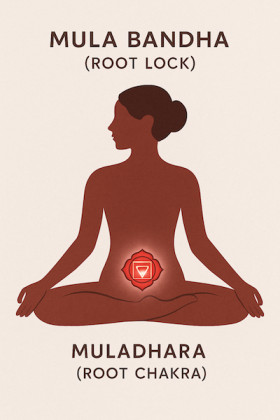
Mula Bandha is a yogic technique that involves gently contracting and lifting the pelvic floor, specifically the perineum the small area of tissue between the genitals and the anus.
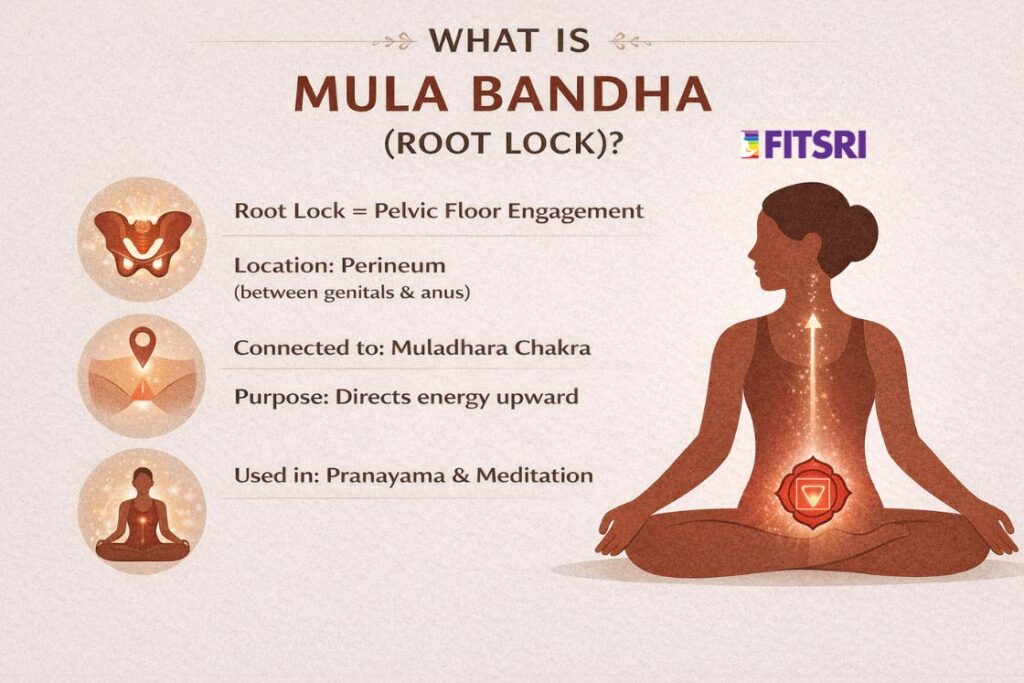
In Sanskrit, mula means root or foundation, and bandha means lock or seal. So the name itself tells you what the practice does: it locks and seals the base of the body, preventing energy from dissipating downward and redirecting it upward through the spine.
Most people first encounter it as a physical action, and that’s the right place to start. But over time the practice reveals a second dimension a turning of awareness toward the base of the spine that goes beyond just muscle engagement. Traditional yoga teachings describe this as sealing the Muladhara Chakra, the root energy center responsible for feelings of groundedness, stability, and safety.
You can think of Mula Bandha as working on two levels:
On the physical level, you’re consciously contracting the perineal muscles and drawing them upward.
On the energetic level, you’re directing your awareness to the base of the spine and holding it there, which over time develops into a more subtle and sustained form of the practice.
Beginners naturally start with the physical. The energetic dimension becomes accessible as your sensitivity grows through regular practice so don’t worry about it at first.
Where is mula bandha located?
Most people’s first question is simply: where am I supposed to feel this?
The answer is the perineum, the small patch of tissue between the anus and the genitals. It sits right at the base of the pelvis, and learning to contract it specifically is what separates Mula Bandha from just squeezing the whole pelvic floor.
The muscle you are actually recruiting is the pubococcygeus, part of the deeper levator ani group that runs from the pubic bone to the tailbone. This is what distinguishes Mula Bandha from a general pelvic floor exercise. You are targeting the deepest layer at the most central point, not the whole floor broadly.
For men, the focal point is the perineal body, the firm tissue between the scrotum and anus. When you contract it correctly you feel a sensation of drawing upward and slightly inward from that point. Not a surface squeeze. Something deeper.
For women, the same muscle wraps around the vaginal canal. The engagement feels like a narrowing and lifting from the vaginal perineum rather than an outward grip. If you have done Kegel exercises before, this is similar but more specific and more interior.
The most common beginner mistake is going too broad. Tightening the glutes, gripping the inner thighs, or bracing the whole lower belly is not Mula Bandha. None of that is wrong exactly, it just misses the point. You are looking for something much smaller and further inside.
How to practice mula bandha (Root Lock)
To perform Mula Bandha, bring your awareness to the perineum the region between the genitals and the anus. The basic technique involves gently contracting and lifting this area in coordination with your breath.
Note: The perineum is the area between the anus and the genital organs.
Follow these step-by-step instructions to practise Mula Bandha safely and effectively:
Steps
- Begin by sitting in a meditative yoga posture. The most recommended is Siddhasana, where the heel presses against the pelvic region (Muladhara Chakra). However, you can also sit in Vajrasana, Sukhasana, Guptasana, or Gomukhasana whichever feels stable and comfortable for you.
- Take a few deep breaths to relax your body and calm your mind.
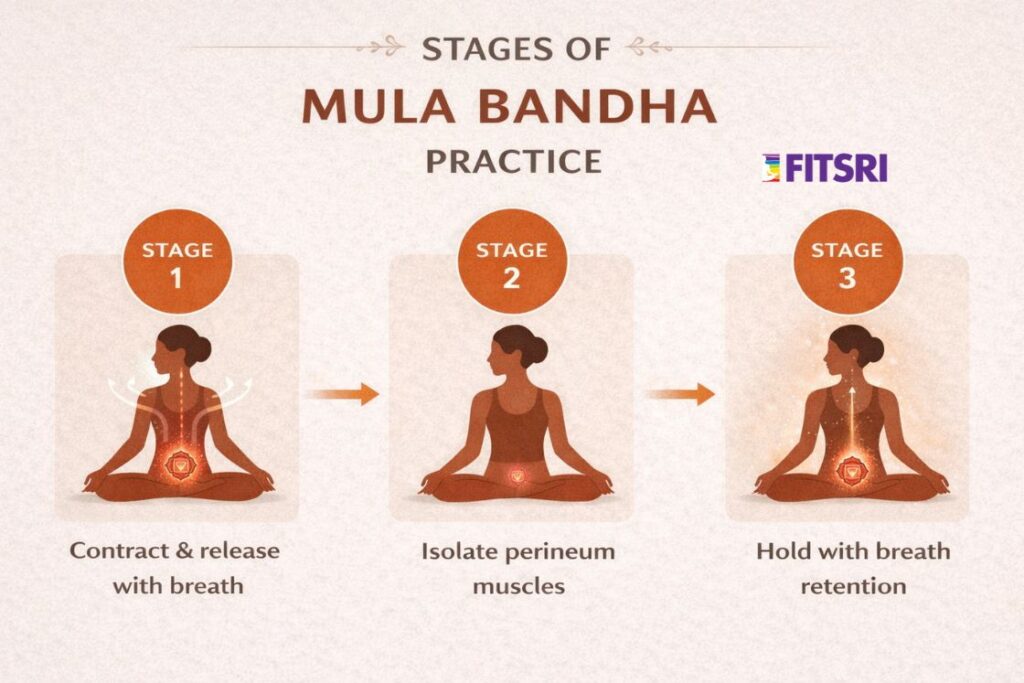
Stage 1: Basic Contraction with Breath
- Inhale deeply.
- With the inhalation, gently contract the perineal muscles (or vaginal region in females) and draw them slightly upward, as if lifting toward the spine.
- Exhale slowly, releasing the contraction.
- Repeat the contraction and release rhythmically with each breath.
Tip: This stage engages the entire pelvic floor. Move slowly and smoothly without straining.
Stage 2: Isolating the perineum
- Now shift your focus to only the perineum, isolating it from the rest of the pelvic floor muscles.
- Slowly contract this region and hold the contraction for a few seconds.
- Release it gently and breathe naturally.
- Repeat several times.
Goal: To identify and strengthen the specific muscles associated with the Muladhara Chakra, rather than the entire pelvic floor.
Stage 3: Breath Retention with Contraction
- Inhale deeply and hold the breath.
- While holding the breath, gently contract the perineal muscles and hold the lock.
- Maintain this contraction for as long as you can comfortably hold your breath.
- Release the contraction as you exhale.
- Rest with a few normal breaths, then repeat.
Note: Never strain the breath. Stop if you feel discomfort., you can try this for a while, but after some practice, you can increase the time gradually.
[contact-form-7]
It connects to something deeper. For those drawn to the traditional teachings, Mula Bandha is considered essential for awakening the Muladhara Chakra and allowing prana to rise through the central energy channel known as the Sushumna Nadi. Whether or not that framework resonates with you, most practitioners agree that something shifts in their awareness with sustained practice. That shift is worth experiencing for yourself.
What does mula bandha feel like?
This is what most articles skip over, which is frustrating if you are trying to figure out whether you are doing it correctly.
When engaged properly, Mula Bandha produces a subtle upward lift at the base of the body. Most practitioners describe a feeling of being more grounded and physically settled. A quiet warmth or subtle energy at the base of the spine. A sense of gathering inward rather than energy scattering outward. And often a noticeable calming of the mind.
It does not feel like straining, gripping hard, or holding tension anywhere. If it feels effortful or uncomfortable, ease back. You are engaging too forcefully.
Mula bandha vs. kegel exercises: what’s the difference?
Both engage the pelvic floor, but they’re not the same thing.
Kegel exercises are a rehabilitation and strengthening tool developed in Western medicine. They’re typically prescribed for conditions like urinary incontinence or pelvic organ prolapse, and the goal is purely muscular — contract and hold, contract and hold.
Mula Bandha includes the physical contraction but layers in breath coordination, intention, and sustained awareness. It’s practiced not just for muscle tone but to influence the nervous system, direct energy flow, and support deeper meditative states. The perineal specificity also differs — Kegels often engage the entire pelvic floor broadly, while Mula Bandha aims for a more targeted interior contraction.
That said, the two practices can complement each other, and if you’re already familiar with Kegels, you have a head start on finding the muscular engagement.
Mula bandha with pranayama
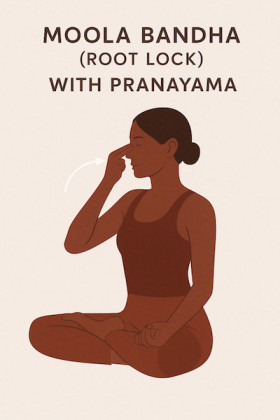
Combining Moola Bandha with Pranayama (breath control) significantly enhances the benefits of both practices. While pranayama regulates the flow of prana (vital life force) through the subtle body, Moola Bandha directs this energy upward and prevents its dissipation.
This powerful combination allows the practitioner to retain and channel energy more consciously, supporting inner balance and spiritual growth.
When Mula Bandha is engaged during inhalation, it draws Apana Vayu (the downward-moving energy) upward. Simultaneously, Prana Vayu (the upward-moving energy) is brought downward during exhalation. The meeting point of these two energies creates a dynamic internal pressure, naturally leading to breath retention (kumbhaka).
This energetic “collision” is essential for awakening deeper awareness and activating the Muladhara Chakra (Root Chakra).
Practising mula bandha with nadi shodhana
One effective way to integrate Moola Bandha with pranayama is through Nadi Shodhana (alternate nostril breathing). This combination encourages:
- Upward movement of Apana Vayu during inhalation
- Downward movement of Prana Vayu during exhalation
- Kumbhaka (breath retention) where Prana and Apana energies merge
This synergy refines the breath, increases pranic absorption, and prepares the body for deeper meditative states. Over time, regular practice helps awaken the subtle energy channels (nadis) and supports the rising of Kundalini Shakti.
Key Benefits
- Enhances pranic control and retention
- Supports hormonal balance and pelvic organ health
- Promotes deeper mental stillness and energy awareness
- Helps activate the Root Chakra (Muladhara)
With continued practice, this powerful combination can lead to a profound sense of internal bliss, stability, and spiritual growth.
What does mula nandha feel like?
When engaged properly, Mula Bandha produces a subtle upward lift at the base of the body. Most practitioners describe a feeling of being more grounded and physically settled. A quiet warmth or subtle energy at the base of the spine. A sense of gathering inward rather than energy scattering outward. And often a noticeable calming of the mind.
It does not feel like straining, gripping hard, or holding tension anywhere. If it feels effortful or uncomfortable, ease back. You are engaging too forcefully.
Benefits of mula bandha(Root Lock)
Moola Bandha works by gently engaging the muscles of the pelvic floor, which helps activate the body’s subtle energy and support internal balance. This simple yet powerful practice can improve pelvic health, calm the nervous system, and strengthen the connection between mind and body. Over time, it also helps to stimulate the root chakra, aiding in emotional stability and spiritual growth.
- Calms the nervous system
The perineum sits at a major nerve junction in the body. Gently contracting this area stimulates those nerve pathways in a way that tends to quiet the mind rather than activate it. Practitioners who deal with chronic stress or restlessness often find this one of the most grounding additions to their routine.
- Supports Kundalini awakening
The Muladhara Chakra is located in the perineum region. Moola Bandha activates the flow of Prana and Apana Vayu in this area, which helps stimulate the Root Chakra.
Kundalini energy resides in the Muladhara Chakra. As Moola Bandha activates this chakra, it also stimulates the dormant Kundalini energy.
In addition, the three main Nadis Ida, Pingala, and Sushumna originate from the perineum and extend through all the chakras. These Nadis carry Kundalini energy throughout the body. Moola Bandha activates these Nadis and supports the process of Kundalini awakening.
- Supports digestive health
In yogic physiology Mula Bandha regulates the downward moving energy called Apana Vayu that governs elimination. In practical terms the rhythmic compression in this region supports gut motility and can ease bloating or sluggishness.
- Strengthens the pelvic floor and supports the lower back
Consistent engagement builds tone and stability in the pelvic region, which supports spinal alignment, protects the lower back, and makes yoga postures more stable and comfortable to hold. Research has found meaningful benefits specifically for women managing mild pelvic organ prolapse.
- Improves sexual health and vitality
Better blood circulation in the pelvic region supports reproductive health in both men and women. Practitioners often report improved endurance and a general increase in vitality over time.
- Helps with menstrual health
For women, regular practice can ease menstrual cramping and support hormonal regularity. The toning effect on the pelvic muscles reduces tension linked to hormonal fluctuation.
Research ¹ suggests that the regular practice of Mula Bandha can significantly benefit women with mild-grade Pelvic Organ Prolapse, showing positive therapeutic effects.
- Deepens pranayama and meditation
This is where experienced practitioners find the most value. Mula Bandha prevents energy from dissipating downward during breathwork, which produces noticeably longer and steadier states of concentration. If your meditation practice feels scattered, adding the root lock is often what changes that.
Conclusion
Mula Bandha, also known as the Root Lock, is more than just a physical contraction. It is a powerful yogic practice that builds the foundation for spiritual growth, mental clarity, and physical well-being. By activating the Muladhara Chakra and guiding the flow of prana, this practice helps balance the body’s energy, strengthens the pelvic region, and calms the nervous system.
Whether you are seeking inner stability, chakra healing, or better control over your emotions and hormones, Moola Bandha is a valuable tool in your yoga journey. Practising it regularly with breath awareness or pranayama can open the door to deeper meditation, kundalini awakening, and a lasting sense of inner peace.
Frequently Asked Questions (FAQs)
Early morning, before eating, is traditional the body is calm and the mind is clear. You can also practice it within your pranayama or meditation session.
Start with 5–10 seconds per round and repeat 5–10 times with rest between. As your awareness and muscle control develop, you can gradually increase the duration. There’s no rush.
Yes. Stages 1 and 2 are very approachable for beginners. Skip Stage 3 (breath retention) until you’re comfortable with the basic contraction.
Possibly. Regular pelvic floor engagement through practices like Mula Bandha has been associated with improvements in mild urinary incontinence. For more significant conditions, work with a pelvic floor physiotherapist alongside your yoga practice
Yes and this is how many experienced practitioners use it. A gentle, continuous Mula Bandha can be maintained during standing poses, inversions, and pranayama to add stability and energetic focus. In dynamic flows, you might engage and release with the breath rather than holding continuously.
Many people notice increased pelvic awareness and a subtle sense of groundedness within the first few sessions. Deeper benefits — better concentration, hormonal balance, emotional stability tend to develop over weeks and months of consistent practice.
A gentle interior lift at the base of the pelvis, a sense of being more settled and grounded, and often a quiet mental clarity. It should feel effortless like holding a feather, not a fist.
The post Mula Bandha (Root Lock): What It Is, How to Do It, and Benefits appeared first on Fitsri Yoga | Yoga Alliance Certified Online Yoga School.