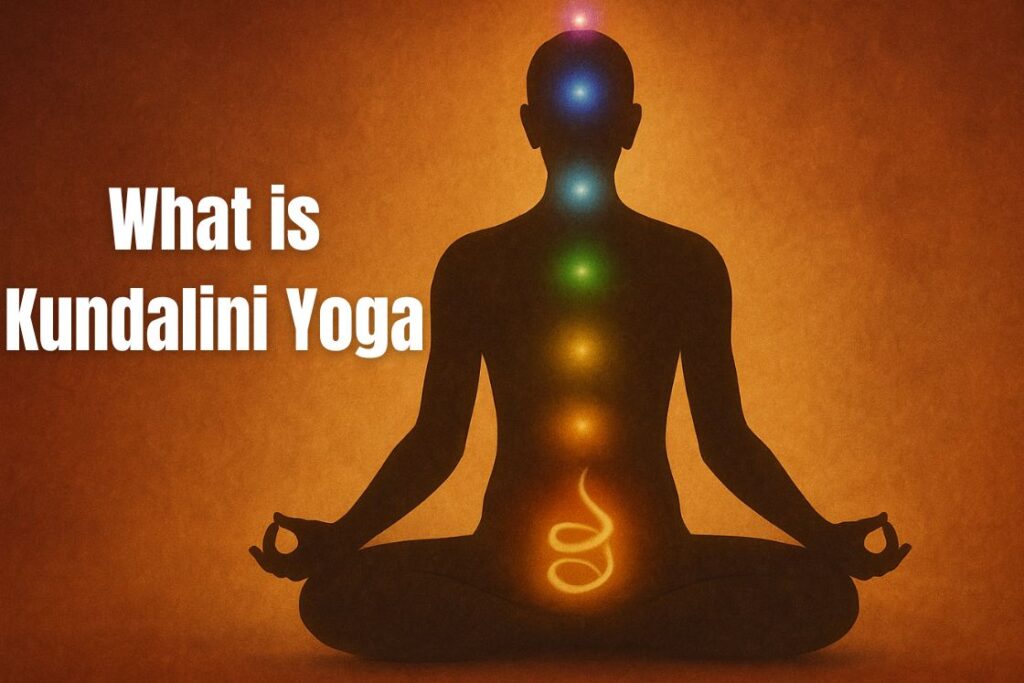
Kundalini Yoga works with the body, breath, mind, and subtle energy. It is a traditional path rooted in Tantra and classical yoga, designed to awaken inner clarity and deeper awareness.
In recent years, Kundalini Yoga has gained attention for both its deep benefits and the questions surrounding safety, awakening symptoms, and emotional effects. This article explains Kundalini Yoga from a traditional yogic perspective, focusing on gradual practice, inner balance, and responsible guidance.
Kundalini Yoga is a traditional yogic system that explores the hidden energy within the human body. Many yoga styles work mainly with posture, movement, or breath, but Kundalini Yoga goes further. It teaches that a quiet and powerful force rests at the base of the spine, and when prepared with the right practices, it supports growth in the body, mind, and awareness.
These teachings come from ancient yogic and Tantric traditions, where the human being is understood as a blend of physical structure, breath, subtle channels, and consciousness. The purpose of Kundalini Yoga is to bring these layers into balance so that the inner energy can move without obstruction.
For beginners, Kundalini may seem mysterious at first, but the idea is simple. Just as we have a nervous system and a circulatory system, yoga describes an inner system of energy channels and centers. Kundalini Yoga works with these through movement, breath, sound, and meditation.
What is kundalini? the primordial energy
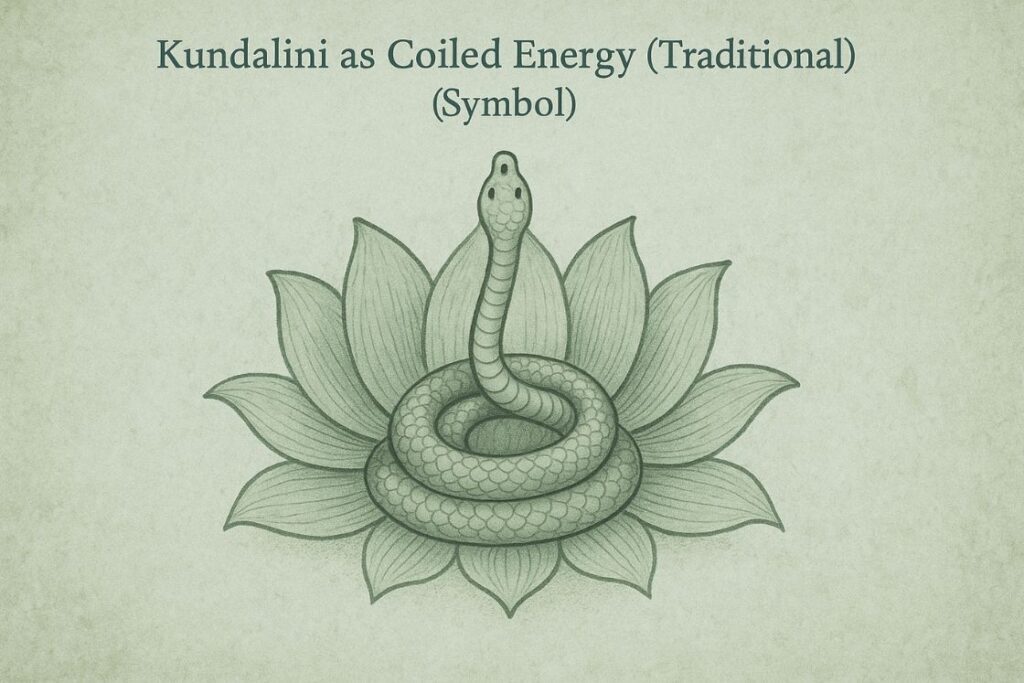
Kundalini is the inner coiled energy at the base of the spine described in classical yoga. It is seen as a hidden source of vitality, creativity, awareness, and spiritual growth. The word kundal means “coiled,” pointing to the idea that this energy rests in a folded and quiet state until the body and mind are ready.
According to yogic philosophy, two forces shape human experience:
- Purusha: pure consciousness
- Prakriti: creative energy
Kundalini is viewed as the expression of Prakriti inside each person. Many people cannot feel it clearly because it stays unmanifest, like a seed waiting for the right conditions to sprout. With steady breath, posture, mantra, and attention, this inner force becomes easier to sense.
The aim of Kundalini Yoga is not only to awaken this energy but to guide it gently and safely. When it begins to rise through the central channel of the spine, it touches the chakras, bringing clarity and stability according to traditional teachings.
Historical roots of kundalini yoga
The concept of Kundalini appears in early yogic and Tantric literature, including the Upanishads and various Tantras. These texts describe chakras, nadis (energy channels), and an inner energy that becomes active when the mind is steady and disciplined.
Classical Hatha Yoga texts such as the Hatha Yoga Pradipika and Gheranda Samhita describe practices mudras, bandhas, and pranayama that gradually prepare the body and mind for higher awareness. These practices were never meant for sudden or forceful awakening.
- Development of Modern Kundalini Yoga: In the late nineteenth and early twentieth centuries, different traditions blended elements of:
- Bhakti Yoga (devotion, mantra)
- Raja Yoga (meditation, discipline)
- Shakti–Tantra (chakras, energy channels)
Yoga scholars like Elizabeth De Michelis, Sravana Borkataky-Varma and Anya Foxen explain that what we call “Kundalini Yoga” today is the result of this integration. Instead of being one single ancient school, it developed gradually as teachers combined traditional ideas with practical methods suited to modern students.
- Traditional vs Modern Interpretations
Traditional Kundalini practices focus on:
- chakra meditation
- mudras and bandhas
- pranayama
- inner visualization
- gradual purification
Modern classroom styles often include:
- kriya sequences
- mantra chanting
- rhythmic breathwork
- group-based energy practices
Both aim to support inner awakening, but the pace and method differ.
Subtle anatomy of kundalini yoga
Kundalini Yoga works with subtle structures that influence how energy and awareness move. Two key concepts are nadis and chakras.
Nadis: energy channels
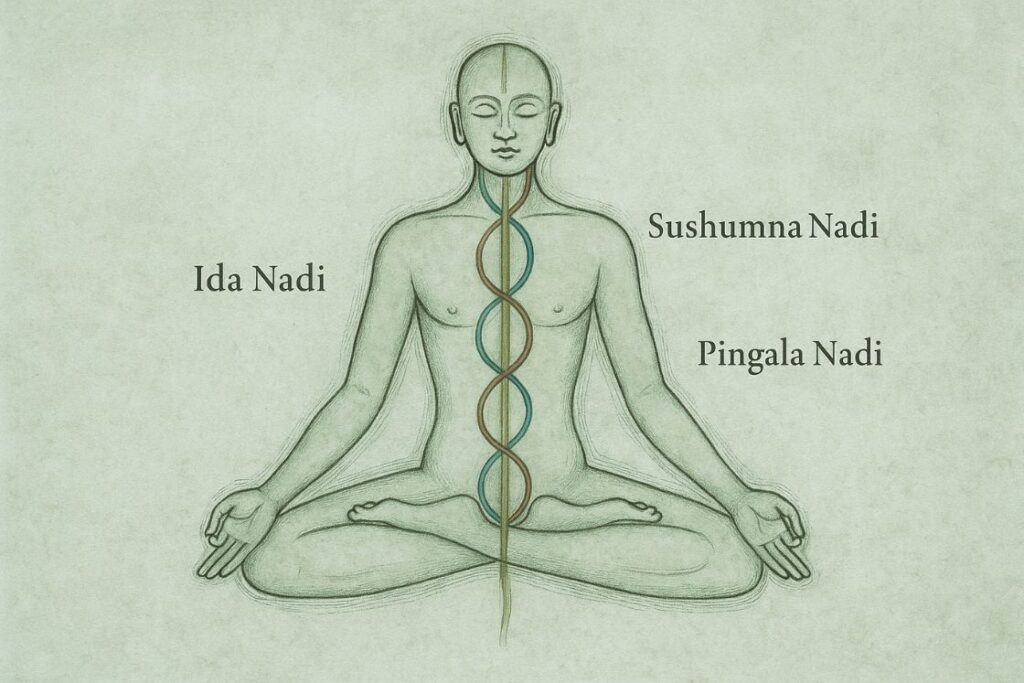
Yoga describes thousands of fine channels called nadis, which carry prana – the life force-throughout the body. Their purpose is to support physical, mental, and emotional balance.
- Ida Nadi flows along the left side of the spine and supports calmness, cooling energy, and introspection.
- Pingala Nadi flows along the right side of the spine and supports vitality, alertness, and action.
- Sushumna Nadi runs through the centre of the spine and serves as the main pathway for inner growth.
When Ida and Pingala are balanced through breath and awareness, Sushumna becomes active, allowing prana to move steadily upward.
Also Read: Nadis and Chakras: Working Mechanism of Subtle Body
Chakras: the seven energy centers

Chakras are points of awareness where nadis meet. Each chakra has a location, emotional quality, and connection to a gland. The following descriptions reflect traditional teachings:
1. Mooladhara – Root Chakra
Mooladhara is the root place of Kundalini energy, where it lies in the dormant state (denoted as a coiled serpent). The exact place of kundalini energy in our body is easy to know. Roughly its dominance is found in the pelvic area.
Kundalini yoga helps in the stimulation of this chakra, which results in the awakening of the dormant serpent energy lies within it. This helps in regulations and an advanced functioning of the excretory system.
2. Swadhisthana – Sacral Chakra
Once Kundalini activates, Swadhisthana is the second place of kundalini passing. It is located two inches above the root chakra. This chakra is said to be blocked due to fear, especially the fear of death.
Kundalini yoga involves the mantra chanting and meditation techniques, which help in unblocking this chakra. However, on balance, it makes a practitioner fearless and creative.
3. Manipura – Navel Chakra
Manipura comes at third place as kundalini ascends along the spine.
Kundalini yoga rectifies the hurdles causing its blockage & fills an individual with enthusiasm, self-confidence, wisdom, and spiritual highness.
4. Anahata – Heart Chakra
Anahata chakra is located near the heart, along the line of the spine. This chakra is represented by the lotus flower with 12 petals.
When kundalini passes through the heart chakra, it provokes the qualities of love, kindness, compassion, peace, purity, understanding, empathy, bliss, forgiveness, peace, unity, harmony, etc.
5. Vishuddhi – Throat Chakra
Vishuddhi chakra is located at the throat position in the vicinity of the spine. It is believed that the blockage of this chakra brings death and decay to an individual.
However, practising kundalini yoga under the guidance of a trained master can do wonder to a practitioner. Unblocking or opening of throat chakra transforms the negative experience into wisdom and learning. It also corrects the feeling of guilt, if once opened.
6. Ajna – Third Eye Chakra
Ajna is located in the center of the forehead and between the eyebrows. It signifies the subconscious mind.
Kundalini yoga with the help of breathing techniques, trataka, sambhavi mudra, etc helps in opening of this chakra. This further connects people to their intuition, revelation past and future scenarios.
7. Sahasrara – Crown Chakra
This chakra is located at the top of the head.
Kundalini yoga helps in opening or unblocking this final chakra to generate pure consciousness or bliss in the individual. However, the accomplishment of this chakra induces the state of Nirvikalpa samadhi.
How Kundalini yoga awakens energy
Kundalini Yoga works by preparing the body, breath, and mind so that inner energy can move naturally and without strain. In traditional yoga, awakening is not forced. It unfolds gradually as the system becomes balanced and steady. This process can be understood in three connected stages.
1. Clearing tension and energy blockages
Long periods of sitting, mental stress, and shallow breathing often create stiffness in the spine, pelvis, and nervous system. Before inner energy can move freely, this tension needs to be released.
Gentle movements, conscious posture, and rhythmic practices help restore ease in the body. Certain kriyas, such as Sat Kriya when taught correctly, combine movement, breath, and sound to support this release. As posture improves and breathing becomes smoother, the energy channels (nadis) begin to function more evenly.
This stage builds the foundation. Without clearing tension and restlessness, higher practices can strain the system.
2. Gently activating and guiding prana
Once the body and breath are steadier, practices begin to activate prana in a controlled way. Asanas that lengthen and align the spine create space for inner movement, while bandhas Moola, Uddiyana, and Jalandhara act as subtle internal locks that guide energy upward.
These techniques are never performed with force. They are applied lightly and with awareness, allowing prana and attention to work together. The aim is not stimulation, but direction and balance. When done correctly, the inner energy begins to move in a calm and organised manner.
3. Balancing the nadis and integrating awareness
Pranayama plays a central role in this stage. Practices such as long deep breathing and alternate nostril breathing help balance Ida and Pingala nadis, which stabilises the nervous system and supports inner clarity. Some traditions also include breath of fire, but only when the practitioner is properly prepared.
Meditation completes the process. When breath and posture are steady, the mind naturally becomes quiet. In this state, awareness rests along the spine, and energy moves through the central channel without effort.
At this stage, awakening is experienced not as intensity or sensation, but as clarity, stability, and inner balance.
Kundalini Yoga does not awaken energy through force or excitement. It awakens awareness through preparation, patience, and steadiness. A calm mind, smooth breath, and grounded body are the true signs that the process is unfolding correctly.
Is kundalini yoga safe?
Kundalini Yoga is considered safe when practised in a traditional, gradual, and disciplined way. Classical yoga systems emphasise preparation of the body, breath, and mind before working with higher energy. Difficulties usually arise not from Kundalini Yoga itself, but from forcing techniques, using intense breathwork without readiness, or practising without proper guidance.
Traditional teachers have always advised against sudden stimulation of energy. Instead, they stress steady practice, grounding, and patience. When this approach is followed, Kundalini Yoga supports balance, clarity, and inner stability rather than disturbance.
Possible side effects of kundalini awakening
As the body and nervous system adjust, some practitioners may experience temporary and mild changes. These are generally not signs of harm, but natural responses as awareness and energy become more refined.
Commonly reported experiences include:
- emotional release or heightened sensitivity
- changes in sleep patterns
- periods of mental quiet or inner stillness
- increased awareness of bodily sensations
These effects are usually short-lived. With grounding practices, steady breathing, proper rest, and moderation, the system naturally returns to balance. Traditional yoga teaches that stability is maintained through regular routine and continued guidance, allowing inner changes to unfold safely and calmly.
Bihar school of yoga: the traditional kundalini path
The Bihar School of Yoga presents Kundalini Yoga as a complete and traditional system. Its teachings come from Tantra and classical yoga texts, where the journey of awakening is slow, steady and supported by purification of the whole being. In this approach, awakening is not seen as a sudden event but as a natural result of preparing the body, breath and mind.
Foundation in Tantra
The Bihar tradition bases its teachings on Tantra, where the human being is viewed as a combination of physical structure, subtle channels, mental patterns and spiritual potential.
Tantra explains the symbolic form of Kundalini, the chakras, the nadis and the link between prana and the mind. It shows that prana does not move freely when the mind is restless, and the mind cannot settle when prana is uneven. This understanding forms the base of all Kundalini practices in the Bihar system.
Preparatory practices
Before working with Kundalini, the Bihar tradition emphasises shuddhi, or purification. This includes several preparatory practices:
- Shatkarmas: cleansing techniques such as neti, dhauti and kapalbhati to clear blockages.
- Asana: steady postures that open the spine and strengthen the nervous system.
- Pranayama: breath practices that balance Ida and Pingala.
- Yoga Nidra: deep relaxation to release mental tension and emotional pressure.
- Mouna: periods of silence to calm the inner dialogue.
These practices prepare the body and mind so that they can hold higher energy without strain.
Kriya yoga (satyananda system)
A central part of the Bihar School method is the Kriya Yoga taught by Swami Satyananda Saraswati. This system contains twenty kriyas arranged in a specific order. Each kriya combines:
- steady breath
- visualisation
- chakra awareness
- movement or internal focus
The kriyas work layer by layer. They remove tension, activate subtle centres and guide the energy gently upward. Because the practices are arranged in a sequence, students progress gradually and safely.
Mantra and nada yoga
Sound plays an important role in the Bihar system. Practices include:
- Ajapa Japa, the natural repetition of a mantra with the breath
- Seed mantras associated with different chakras
- Inner sound meditation, where attention rests on subtle vibrations within the body
These practices keep the mind steady and help prana flow smoothly through the central channel.
Mudras and bandhas
The Bihar tradition also teaches classical mudras and bandhas to refine the movement of prana and stabilise awareness:
- Moola Bandha to awaken awareness at the base
- Uddiyana Bandha to lift prana upward
- Jalandhara Bandha to stabilise the upper centres
- Advanced practices such as Maha Mudra, Maha Bandha, and Maha Vedha
These techniques are taught only after sufficient preparation and are applied gently, with awareness rather than force.
These practices refine the flow of prana and strengthen the energetic structure needed for awakening.
Why bihar yoga emphasises gradual awakening
he Bihar School of Yoga teaches that sudden or forced awakening can disturb the nervous system and mental balance. A gradual approach protects the practitioner and ensures that inner changes bring clarity, stability, and understanding rather than confusion.
By focusing on purification, disciplined practice, and steady awareness, the Bihar system offers a safe and complete path for students who wish to explore Kundalini Yoga in a traditional and responsible way..
Join Our 40-Day Live Tantra-Based Kundalini Yoga Course
Kundalini awakening and the chakras: what to expect
Kundalini awakening is described in yogic tradition as a gradual unfolding of awareness. As the inner energy begins to move upward through the central channel, it touches each chakra and refines its qualities. This process is gentle when the body, breath and mind are prepared, and it may feel different for every student.
- Traditional explanation
According to the classical teachings, Kundalini rests at the base of the spine and travels through the chakras as the system becomes clear and steady. Each chakra represents a level of understanding and awareness. When the energy reaches a chakra, it is said to bring lightness, clarity and a sense of inner growth in that area.
These descriptions are symbolic as well as practical. They help students understand how inner transformation can unfold. The movement of Kundalini is not shown as a forceful rise but as a natural response to a purified and balanced system.
- Physical, emotional and mental shifts
Students sometimes notice subtle changes when they practise regularly:
- Physical: better posture, smoother breath, a sense of lightness along the spine
- Emotional: more stability, less reactivity, easier release of old tensions
- Mental: clear thinking, stronger focus, deeper concentration
These shifts may appear slowly over time. They are usually the result of steadiness in breathwork, meditation, and lifestyle changes, not sudden or dramatic events.
Some traditions describe warm sensations, gentle vibrations or increased sensitivity in certain areas of the body. These can happen for some people, but they are not required for progress. A calm mind and a balanced nervous system are the strongest signs of stable growth.
Why experiences vary
Every practitioner has a different physical structure, emotional background and level of preparation. This is why experiences of Kundalini are never identical. Some students feel subtle changes early, while others notice shifts only after months or years of practice.
The tradition explains that the speed and nature of awakening depend on:
- purity of breath and prana
- steadiness of mind
- strength of the nervous system
- guidance from the teacher
- personal lifestyle and discipline
Because these factors differ for everyone, the journey also differs.
Safety Message
Kundalini awakening should not be forced through intense breathwork or long sittings without guidance. Sudden attempts to stimulate this energy can strain the nervous system or create emotional imbalance. The safest path is slow, supported and grounded in regular practice.
No guarantee of dramatic sensations
Not every practitioner will feel heat, vibration or strong sensations. Traditional teachers remind us that these signs are not proofs of awakening. Quiet inner stability, clarity in awareness and balanced emotions are more reliable markers of progress.
Kundalini Yoga is not about chasing dramatic experiences. It is about steady refinement, inner balance and the growth of awareness in a gentle and natural way.
Kundalini yoga vs other yoga styles
Kundalini Yoga stands apart because it works directly with the subtle energy system through breath, sound, inner awareness and classical yogic methods, while other styles focus mainly on posture, movement, strength or alignment.
| Yoga Style | Main Focus | Key Practices | How It Differs from Kundalini Yoga |
|---|---|---|---|
| Hatha Yoga | Steady postures and breath control | Asanas, pranayama, cleansing practices | Builds physical strength and balance first. Kundalini adds chakras, nadis, mantra and inner energy work. |
| Ashtanga Yoga | Discipline, strength, fixed sequences | Set series of poses, ujjayi breath, vinyasa | Strong and athletic. More physical intensity, less focus on subtle energy. |
| Vinyasa Yoga | Flowing movement with breath | Continuous transitions, creative sequences | Energetic and fluid. Kundalini uses slower, inward practices rather than dynamic flow. |
| Iyengar Yoga | Alignment, precision, therapeutic support | Props, detailed instruction, long holds | Focuses on structural balance, not energy awakening. Does not emphasise chakras or bandhas. |
| Modern Kundalini Yoga (Yogi Bhajan Style) | Quick energetic shift and group practice | Kriyas, breath of fire, mantra chanting | Faster pace. Designed for immediate vitality. Traditional Kundalini (Bihar) is slower and more gradual. |
| Bihar School of Yoga (Traditional) | Step-by-step inner purification | Shatkarmas, pranayama, mudras, bandhas, classical kriyas | Slow and methodical. Aims for safe inner awakening without sudden stimulation. |
Benefits of kundalini yoga
Kundalini Yoga is a gradual journey from the base of the spine toward higher awareness. As the inner energy becomes clearer and more active, it supports the whole being-physically, mentally, emotionally, and spiritually. The benefits unfold over time as breath, posture, sound, and meditation work together.
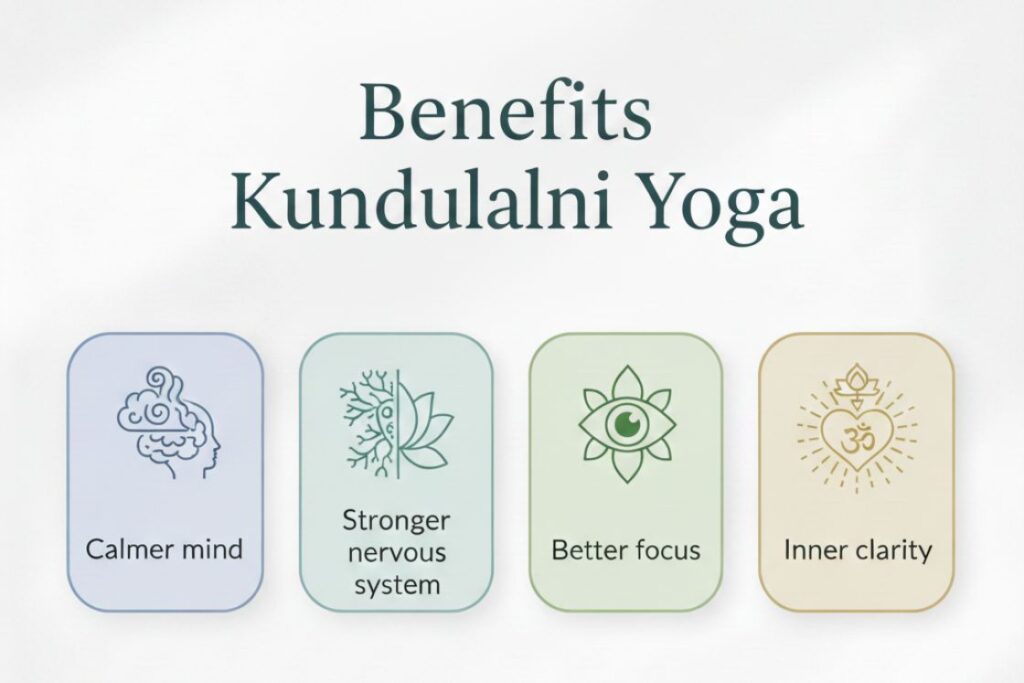
1. Calms the fluctuating mind
Breathwork and meditation are core parts of Kundalini Yoga, and they work together to quiet the mind.
Steady breathing increases the flow of prana and helps the mind settle, while meditation guides this calmness into focused awareness. Many students feel less restlessness and more emotional ease when these two practices are combined.
Modern research also supports this. A clinical study found that people who practised Kundalini Yoga showed reduced anxiety and emotional stress, and another study observed a drop in cortisol levels, the hormone linked with tension. These findings match what the tradition has always said: slow breath and steady attention naturally calm the inner disturbances.
2. Strengthens the nervous system
A steady nervous system helps us respond to life with clarity rather than reaction.
Kundalini practices—such as rhythmic breathing, gentle kriyas and the use of bandhas train the body to stay centred even when life becomes demanding. With regular practice, students often notice they feel more stable, less overwhelmed and better able to handle stress.
Scientific studies reflect this idea as well. Research on yoga and breathwork shows that these practices support nervous system balance and reduce the body’s stress responses. This explains why many practitioners feel stronger from within and less shaken by everyday challenges.
3. Improves concentration and focus
Kundalini Yoga brings attention to the spine and the higher chakras, especially the heart and crown centres.
In traditional teachings, these centres are linked with insight, clarity and inner guidance. As the breath becomes deep and steady, the mind also becomes steady, and this naturally improves concentration. Many students find they can stay present for longer, think more clearly and make decisions with greater ease.
Modern studies support this experience. Research on Kundalini practices has shown improvements in memory, attention and overall cognitive function, especially in adults dealing with stress or age-related changes. These findings reflect what yogic wisdom has always taught: when breath and awareness move together, the mind becomes clear and focused.
4. Encourages a shift from outer pressure to inner clarity
Kundalini Yoga helps reduce the constant pull of outer demands—status, achievement or the need for approval.
As awareness rises through steady breath and mindful movement, students begin to feel more anchored within themselves. The mind becomes less driven by comparison or restlessness and more guided by inner clarity. This shift often brings a sense of freedom, purpose and connection to one’s true nature.
Research on Kundalini and meditative yoga practices supports this inner change. Studies show improvements in emotional balance, self-compassion and overall well-being among regular practitioners. These findings reflect what yogic tradition has long described: when the inner energy becomes steady, the mind naturally turns inward and life is guided more by clarity than pressure.
Kundalini Yoga supports calmness, mental focus, emotional balance, and a deeper sense of purpose by bringing breath, awareness, and inner energy into harmony.
Essential precautions
Kundalini Yoga is a deep and powerful path, and it should be approached with care. The practices are safest and most effective when followed step by step. These guidelines help ensure that the body, breath and mind remain balanced throughout the journey.
- Start Slowly: Beginners should move at a gentle pace. Short sessions with simple breathwork and easy movements are enough in the beginning. This allows the body to adapt and prevents strain on the spine and nervous system.
- Avoid Forceful Breathwork: Strong or rapid breathing techniques should not be done without preparation. Forcing the breath can disturb the balance of prana and create tension instead of clarity. Practise only the methods that suit your level and always breathe comfortably.
- Learn From Qualified Teachers: Guidance is important, especially for practices involving mudras, bandhas or advanced kriyas. A trained teacher can help correct posture, adjust the breath and make sure the practice is safe. They can also help you understand the signs of over-effort or imbalance.
- Take Medical Advice if Needed: If you have a medical condition, take regular medication, or experience dizziness, anxiety or strong emotional swings, consult a healthcare professional before starting intense practices. Yoga supports health, but it should not replace medical guidance.
- Respect the Energy and the Process: Kundalini Yoga is not about forcing results. Respect the pace of your body and mind. When the system is ready, inner changes happen naturally. Trust steady practice, patience and awareness. A calm and humble approach brings deeper and more stable progress.
Conclusion
Kundalini Yoga offers a complete path for understanding the body, breath, mind and the subtle energy that supports them. It shows that true transformation begins within, through steady preparation and balanced awareness. The rise of Kundalini is not a display of power or dramatic experience. It is a quiet unfolding of clarity, sensitivity and inner strength.
Awakening happens naturally when the system is ready. The purpose is not to seek extraordinary sensations but to develop a stable and open state of mind. This journey teaches patience, discipline and trust in one’s own inner process.
Humility is the foundation of this path. Guidance from experienced teachers, along with simple and regular practice, helps the energy move in a safe and grounded way. When approached with respect, Kundalini Yoga leads to a deeper understanding of oneself and supports a way of living that is calm, aware and connected.
Have you practised Kundalini Yoga? Your experience can help others understand this path better. You can share even one line how it felt, what changed, or what was challenging